
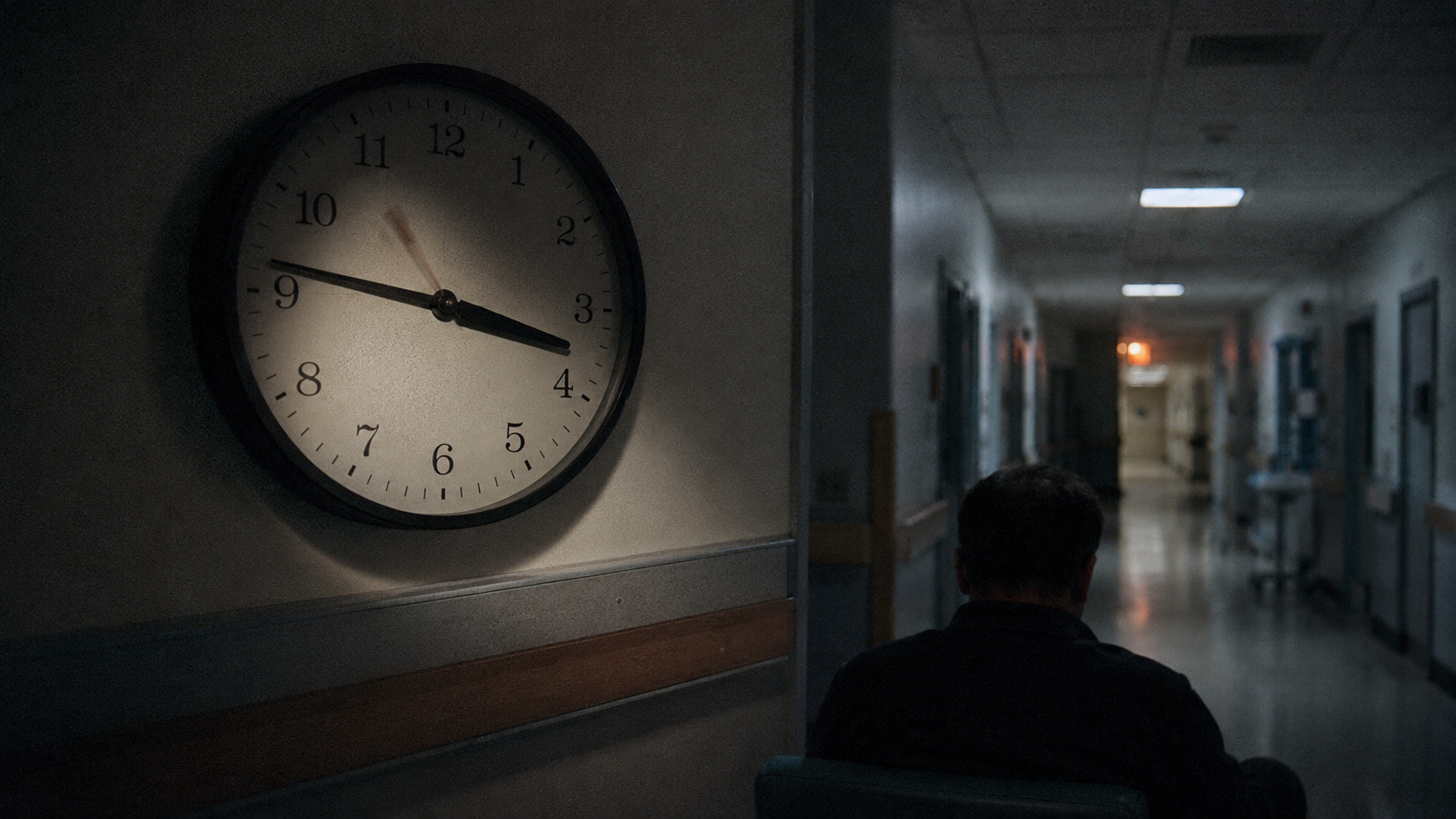

3:47AM in the morning. The waiting room is half-empty. A man we know is sitting in a plastic chair. He has been here twice already this year for the same reason. He will be sent home before noon.
The CMHA’s Closing the Distance report has a number for him too. 10.1% of rural Canadians have made four or more ER visits in a year for a mental health or substance use problem. In cities, that number is 8.9%.
A small gap on paper. A loud one in the room.
Why the ER
When the system upstream is failing, people fall to the system downstream. The CMHA report shows that:
- 29.4% of rural patients face a high travel burden for inpatient psychiatric care.
- Only 12.7% of rural Canadian men consulted a professional in the past year.
- Specialized providers (psychiatrists, psychologists) are concentrated in cities.
If the closest psychologist is three hours away and the waitlist is six months, the ER is the only door open at 3 am.
But the ER is not built for ongoing mental health care. It is built for acute crisis stabilization. Once the immediate risk is managed, the patient is referred back into the same upstream system that was unreachable the night before.
This is why men come back four or more times in a year for the same thing. The door keeps being the same door.
What the CMHA Recommends
The report calls for investment in community-based mental health and substance use supports so rural and remote communities have access to a broader continuum of care. That includes:
- Mobile clinics for primary care and mental health outreach.
- Land-based and culturally safe healing programs.
- Peer support groups for men and women.
- Homegrown training programs for peer supporters, counselors, healers, and paraprofessionals.
- Virtual services to reduce travel burden.
Build the upstream rural Canadians have been asking for.
Peer Support Is Not a Nice-to-Have
Recommendation 2 calls out peer support specifically. That hits close to home for us.
MenTELL.ca was founded in 2023 by everyday men because the distance between the kitchen table and the clinical chair was too wide. Peer support is the bridge. A guy who has been through what you are going through, who is on the other side of it, who picks up at 2am because he used to be the one not picking up.
Peer support does not replace clinical care. It catches people before the ER becomes the only option.
The Flare
For Men’s Mental Health Month Canada this June, Be the Flare is mobilizing one million Canadians around one short video and one simple question. What would you tell your younger self? One line. Two names. 48 hours.
Not because a viral video fixes the system. Because every brother who sees the signal might be the one who picks up his phone before he ends up in the ER.
Stay Connected With MenTELL Year Round
If you have been to the ER more than once in the past year for a mental health or substance use issue, ask the discharge team about case management or peer support referrals before you leave. Sometimes the door we are missing is the one we did not know to ask for.
MenTELL is a year-round Canadian men’s mental health movement. Follow @MenTELL.ca on Instagram, subscribe to CanadianPodcast.ca, and find peer support in the year-round ambassador network at mentell.ca.
Sources
- Canadian Mental Health Association. (2026). Closing the Distance.
- Canadian Institute for Health Information data cited within the report.