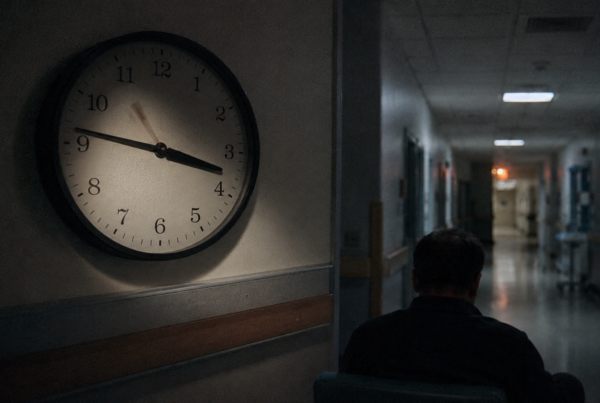


You know the man we are talking about. Quieter than usual. Tired in a way that does not match his week. Snapping over nothing. Or maybe he is the opposite, way too cheerful, almost like he is performing it. You can feel something is off and you are not sure what to do.
None of it is clinical advice.
Start with what you know about him
The friend, brother, dad, partner, or co-worker you are worried about does not need an intervention. He needs you. Per the Canadian Men’s Health Foundation‘s 2025 Canadian Men’s Health Study (Intensions Consulting, n=2,000), nearly 2 in 3 Canadian men have never used mental health services.
The first conversation
Pick the right setting
Side by side beats face to face for most men we know. A drive. A walk. A workout. The dishes. Something to do with the hands.
The line that works
“Are you okay, like actually?” or “I have been thinking about you, how are you doing?” Those two openings broke through the “fine” reflex more than anything else for Canadian men in 2025.
Then go quiet
Long pauses are not awkward. They are the conversation. Resist the urge to fill the silence with advice.
What to say next
Reflect what you heard
“That sounds heavier than you have been letting on.”
Do not minimize
Avoid “everyone goes through that.” True on paper, useless in person.
Make a specific next step
“Let us grab coffee Saturday” beats “we should hang out sometime.”
When to push for professional help
- He is not eating, sleeping, or showing up like he used to.
- He is drinking, using, or numbing more than before.
- He is talking about being a burden, hopeless, or not seeing a future.
- He has gone unusually calm after a hard stretch.
Push hard if you are worried he might hurt himself. Call or text 988 with him in the room or stay on the line until help arrives.
Hand him a Canadian door
- 988 Talk Suicide Canada, 988 free 24/7.
- Hope for Wellness Helpline (Indigenous), 1-855-242-3310.
- ca/” rel=”noopener” target=”_blank”>.
- VAC Assistance Service for veterans, 1-800-268-7708.
- Boots on the Ground for first responders.
- HeadsUpGuys (UBC), headsupguys.org.
- CMHF MindFit Toolkit, menshealthfoundation.ca.
- CMHA branches, cmha.ca.
Take care of yourself too
Helping a man through a hard stretch can be its own weight. Per the CMHA, in any given year 1 in 5 Canadians personally experiences a mental health problem. The man you are helping is one. So might you be.
Where MenTELL fits
Bring your story to Speak Up. Find Canadian resources by need on our Resources hub. Join us for Men’s Mental Health Month in June 2026 with the #BeTheFlare campaign.
Sources: Canadian Mental Health Association, Canadian Men’s Health Foundation 2025 Canadian Men’s Health Study (Intensions Consulting, n=2,000), Talk Suicide Canada.