

The number sits on page 22 of the Closing the Distance report. Nunavut’s 2024 suicide mortality rate was 76.5 per 100,000 people. The Northwest Territories: 21.8. The Canadian national average: 10.6.
Seven times for Nunavut. More than twice for NWT.
It is the kind of statistic that should stop a country. Most days it does not.
The Bigger Suicide Picture in Canada
Roughly 4,000 people die by suicide in Canada each year, according to data from the Public Health Agency of Canada. Close to 75 percent of those deaths are men, the Mental Health Commission of Canada has reported repeatedly.
That is approximately 3,000 men a year. Around eight men a day. The CMHA report adds the rural and territorial layer. The further from the city, the heavier the burden.
Rural and remote Canadians make up 18 percent of the population. Their access to care is the worst in the country. Their travel burden for psychiatric care is seven times higher than urban Canadians. Their substance use disorder rates are 24.4 percent versus 19.9 percent in cities. Most of the suicide deaths the report references are men.
These are not separate statistics. They are one situation seen from different angles.
Why the Territories
The report names what is going on. Nunavut, NWT, and Yukon have large First Nations, Inuit, and Métis populations. Communities are remote. Many lost generations to residential schools, cultural genocide, and forced relocations. Trauma carried forward across generations now meets:
- a system where specialists are concentrated in cities
- a travel burden that can mean leaving the territory for care
- limited culturally safe, Indigenous-led mental health services
- ongoing environmental injustices including water insecurity from industrial activity
- a shortage of Indigenous health providers in the workforce
This is not a personal weakness. This is a public health crisis with a clear address.
What the Report Recommends
CMHA’s five recommendations include:
- Address structural, social, and cultural barriers to mental health care in rural and remote communities.
- Invest in community-based and land-based supports for a broader continuum of care.
- Increase social spending and Indigenous-led solutions consistent with the Truth and Reconciliation Commission’s Calls to Action.
- Tackle stigma in rural and remote communities, including local initiatives that encourage help-seeking among men.
- Improve federal data collection so the country can actually measure what is happening.
Recommendation 4 names men specifically. That tells us where the gap is.
Where MenTELL Fits
We are not therapists. We do not run hospitals. We cannot deliver psychiatric care to Iqaluit. What we can do is shrink the distance to the first conversation.
Three years in, MenTELL.ca is a movement of everyday men. Veterans. First responders. Fathers. Sons. Entrepreneurs. Tradesmen. We do this because we have been in the dark and someone said something that pulled us back. Most of the time, that someone was not a professional. It was a brother.
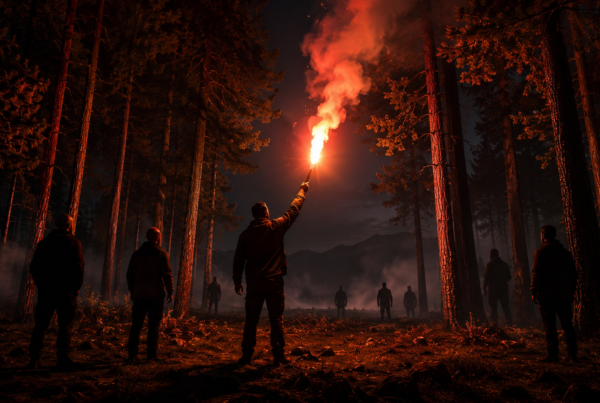
Be the Flare is our Men’s Mental Health Month Canada campaign for June 2026. One line. Two names. 48 hours. We are aiming to reach one million Canadians with one signal in the dark.
This is not a replacement for the system fix CMHA is calling for. It is the part the rest of us can do while the fix gets built.
If You Need Help Right Now
In Canada you can call or text 9-8-8 anytime, anywhere, 24/7.
For First Nations, Inuit, and Métis Canadians: the Hope for Wellness Helpline at 1-855-242-3310 offers culturally grounded crisis support in English, French, Cree, Ojibwe, and Inuktitut.
If you have lost a brother to suicide, the Canadian Association for Suicide Prevention has support resources for those left behind.
Sources
- Canadian Mental Health Association. (2026). Closing the Distance.
- Mental Health Commission of Canada, Men’s Mental Health and Suicide in Canada.
- Public Health Agency of Canada, Suicide in Canada.