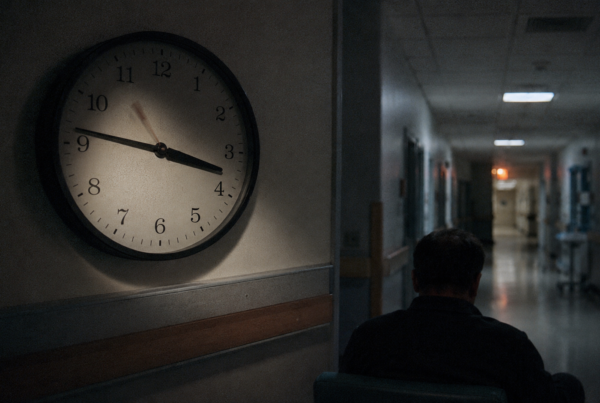


The signs of mental health struggles in Canadian men are not always obvious. The list below is cross-checked with the Canadian Mental Health Association and the Canadian Men’s Health Foundation.
Why men’s symptoms can look different
Per the Canadian Mental Health Association, depression and anxiety in men often show up as anger, withdrawal, irritability, or risk-taking, not the textbook sad-on-the-couch picture. Add to that the Canadian Men’s Health Foundation‘s 2025 finding that nearly 2 in 3 Canadian men have never used mental health services (Intensions Consulting, n=2,000), and you get a country full of guys carrying things their friends never see.
Eight signs we watch for
1. The “fine” reflex
Every conversation hits the same brick wall. He is fine. Always fine. Fine when he lost the contract, fine when his dad got sick, fine when he has not slept properly in two weeks.
2. Sleep is off
Either he cannot fall asleep, cannot stay asleep, or cannot get out of bed. Sleep is one of the first things mental health takes, and one of the last things to come back.
3. Drinking, weed, or screens are creeping up
Not necessarily a problem on its own. But a slow, steady increase that he does not want to talk about is information.
4. Anger out of proportion
Snapping at the kids over something tiny. Road rage that does not fit the situation. Anger is often the only emotion men have been given permission to express, so a lot of underlying stuff comes out as it.
5. He has gone quiet
Not posting. Not texting back. Cancelling plans he used to look forward to. Withdrawal is one of the loudest signals, even though it looks like nothing.
6. Body before mind
Headaches. Stomach issues. Chronic back tightness. Unexplained weight changes. Per CMHA, mental health often shows up in the body first because that is the only place a lot of men let it land.
7. Talking about being a burden
“My family would be better off.” “Nobody would notice.” “I am just dragging everyone down.” Take this one seriously every single time. Call 988 Talk Suicide Canada.
8. Sudden calm after a hard stretch
This one is the one nobody talks about. A man who has been visibly struggling and then becomes oddly calm or peaceful, especially if he is also giving things away or saying goodbyes, needs you to act now. Call or text 988.
What to do when you see these signs
Ask, plainly
“Are you okay, like actually?” Canadian men keep telling us this small change pulls real answers.
Do not advise. Invite
Men told us in 2025 that the most powerful thing was being invited to talk again, not being given a fix. We wrote about that in how we started real conversations with men.
Hand him a door
Free, fast, and Canadian:
- 988 Talk Suicide Canada, call or text 988, free 24/7.
- Hope for Wellness Helpline (Indigenous), 1-855-242-3310.
- ca/” rel=”noopener” target=”_blank”>, free counselling.
- HeadsUpGuys (UBC) men-specific self-checks and clinician directory at headsupguys.org.
- Canadian Men’s Health Foundation MindFit Toolkit, mental health tools and information for Canadian men at menshealthfoundation.ca.
If the symptoms are yours
You are not weak. You are not broken. You are also not alone. Per the CMHA, in any given year, 1 in 5 Canadians will personally experience a mental health problem. The men we love are inside that number. So are the men we have lost.
Start with one of the doors above. Or share your story with us on our Speak Up page. We are listening.
Where MenTELL fits
If you saw yourself or someone you love in this list, here is where to keep reading on this site:
- How to help a Canadian man who is going through it
- How to start the first hard conversation
- Why men mask mental health
- The 2025 men’s mental health statistics in Canada
- Men’s Mental Health Month, all of June 2026
- Men’s Mental Health Awareness Day, June 13, 2026
- PTSD Awareness Month, June
- All Canadian men’s mental health resources by need
- Share your story with #BeTheFlare
- Provincial guides: Alberta, British Columbia, Ontario, Manitoba
Sources: Canadian Mental Health Association, Canadian Men’s Health Foundation 2025 Canadian Men’s Health Study (Intensions Consulting, n=2,000), Talk Suicide Canada, HeadsUpGuys (UBC).